

One of the most common questions I get asked: “Should I use free resources to learn truck dispatching, or should I pay for a course?”
It’s a fair question, especially when you’re just starting out and watching your budget. And in 2026, with AI tools and unlimited YouTube content available, the answer might seem obvious—why pay when you can learn for free?
Well, let me share some honest insights from someone who’s been training dispatchers for years and has seen both approaches play out in real life.
The Free Training Landscape: What’s Actually Available
Let’s start by acknowledging reality: There ARE valuable free resources for learning truck dispatching.
You can find:
- YouTube videos explaining dispatching basics
- Industry forums where dispatchers share experiences
- Blog posts covering various topics
- Free webinars and industry content
- Social media groups dedicated to trucking and dispatching
Some of this content is genuinely helpful. I’ve seen people piece together useful information from free sources.
But here’s where it gets complicated.
The Two Big Problems with Free Training
Problem #1: Complete Lack of Structure
Imagine you’re trying to learn a new language. You could watch random YouTube videos—one about conjugating verbs, another about ordering food at a restaurant, then one about advanced grammar rules you don’t understand yet.
That’s what learning dispatching from free resources looks like.
You might watch a video about rate negotiation before you even understand how load boards work. You’ll read a forum post about handling difficult brokers before you know what paperwork you need to collect. You’ll see content about scaling a dispatching business when you haven’t landed your first client.
The information might be accurate, but it’s scattered, disorganized, and often assumes knowledge you don’t have yet.
Here’s what many people don’t realize: Structuring all that free information properly takes DAYS of work.
You have to:
- Find multiple sources on each topic
- Verify which information is current and accurate
- Organize it in a logical learning sequence
- Fill in gaps where free content doesn’t exist
- Create your own system for tracking what you’ve learned
Is it possible? Yes. Is it worth wasting several days or even weeks of your time when you could pay a few hundred dollars for already-structured content? That’s the question you need to answer.
Problem #2: The Support Black Hole
This is the bigger issue, and it’s where free training really falls apart.
When you’re learning from YouTube videos and blog posts, you have zero support when you get stuck.
And you WILL get stuck. Questions will come up:
- “This video says to do it one way, but that forum post says something different—which is correct?”
- “I don’t understand this specific scenario—what should I do?”
- “Is this rate reasonable for this lane?”
- “How do I handle this unusual situation with my client?”
With free resources, you’re on your own.
Forums can sometimes be helpful, but they can also be harmful. Here’s why: You don’t know who you’re receiving information from or whether it’s accurate.
That person giving you advice on Reddit or Facebook? They might be:
- A successful dispatcher with 10 years of experience
- Someone who started last month and barely knows more than you
- A disgruntled former dispatcher with outdated information
- Someone who’s never actually dispatched but thinks they know how
You have no way to verify their credibility, and bad advice can cost you clients, money, and reputation.
What Paid Training Should Actually Offer
Not all paid courses are worth the money. Some are overpriced garbage. But a good paid training program offers two critical benefits that free resources simply can’t match:
Benefit #1: Structured Learning Path
A quality course presents information in a logical format, walking you from the very beginning to more advanced material.
Instead of random topics scattered across the internet, you get:
- Foundation first: Understanding the industry, terminology, and basic concepts
- Progressive skill building: Each lesson builds on previous knowledge
- Complete coverage: All essential topics covered systematically
- Logical sequence: Learning what you need to know, when you need to know it
This structure alone can save you weeks of confusion and false starts.
Benefit #2: Professional Support
This is the MAIN benefit of paid training, and it’s worth emphasizing.
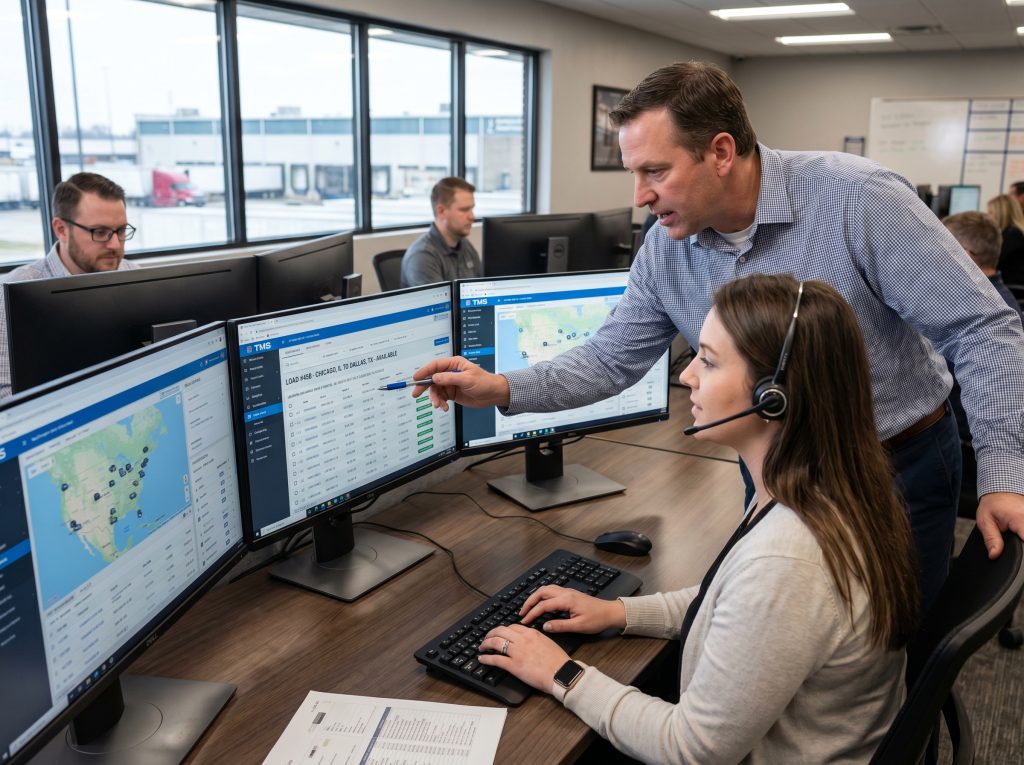
With a quality paid course, you should be getting support from professionals who are actually practicing the trade.
Not random internet strangers. Not outdated forum posts. But real dispatchers who:
- Are currently working in the industry
- Have handled the situations you’re asking about
- Can provide accurate, tested answers
- Understand current market conditions and practices
When you get stuck, you have someone knowledgeable to ask. When you’re confused, there’s someone to clarify. When you face an unusual situation, there’s experience to draw from.
This support can be worth more than all the course content combined.

When Paid Training Becomes a Scam
Let me be absolutely clear: Paid training becomes a scam when it promises things it cannot deliver.
Red flags to watch for:
❌ Guaranteed job placement – No course can guarantee you’ll get hired somewhere
❌ Guaranteed income – “Make $5,000 your first month!” is almost always a lie
❌ Guaranteed business success – Your success depends on YOUR work ethic, not the course
❌ Instant results – “Start dispatching in 24 hours!” ignores the learning curve
❌ Excessive pricing – Courses charging $2,000-$5,000+ for basic dispatching training
Any program making these promises is selling you a dream, not education.
A legitimate paid course should:
- ✅ Provide structured, comprehensive training
- ✅ Offer support from experienced professionals
- ✅ Be realistic about effort and results required
- ✅ Charge reasonable prices for the value delivered
- ✅ Focus on skill development, not guarantees
Real Talk: Our Pricing and What You Get
Let me be transparent about our LearnDispatch courses since I obviously have a stake in this discussion.
Our pricing:
- Monthly subscription: $60/month
- Full course purchase: $399 one-time
What’s included:
- Structured curriculum from beginner to advanced
- Professional support from active dispatchers
- Graded quizzes to verify understanding
- Certificate of completion
- Access to updated content as industry changes
What we DON’T promise:
- Guaranteed jobs or clients
- Specific income results
- Instant success without effort
- Magic solutions to business challenges
Can I compare our students’ results to people who used only free resources? Honestly, no—I have no idea what people who relied solely on free YouTube videos and forums actually accomplished. They’re not contacting me to share their success stories or failures.
What I CAN tell you is that students who complete our courses have a structured foundation and ongoing support as they build their careers or businesses.
The Real Factor That Determines Success
Here’s the uncomfortable truth that nobody wants to hear:
Your success as a dispatcher is determined primarily by YOUR work ethic and YOUR desire to succeed—not by whether you used free or paid training.
I’ve seen people succeed after learning from free resources because they were highly motivated, incredibly persistent, and willing to figure things out through trial and error.
I’ve also seen people buy expensive courses and fail completely because they expected the course to do the work for them.
The course—free or paid—is just a tool. You are the determining factor.
That said, the right tool can make the job much easier and faster.
My Honest Advice: Who Should Choose What
If You’re Broke But Highly Motivated:
Use free resources, but be strategic about it.
If you don’t have money for training, you’ll need to invest more time to:
- Research thoroughly from multiple sources
- Verify information across different platforms
- Structure the material yourself into a logical learning path
- Fill in gaps through trial and error
- Join quality forums and be selective about whose advice you follow
Can you succeed this way? Absolutely. Will it take longer and involve more frustration? Probably.
The motivated person will find a way to get the information they need and implement it—with or without paid training.
If You Have Money to Invest:
Pay for a quality course and don’t waste your valuable time.
Think about it this way: Is your time worth less than a few hundred dollars?
If you spend 20-30 hours researching, organizing, and structuring free content, what’s that time worth? If you could earn $20/hour doing literally anything else, you’ve already “spent” $400-600 in opportunity cost.
Plus, you’ve dealt with:
- Confusion from contradictory information
- Wasted effort learning outdated practices
- Frustration from lack of support when stuck
- Risk of implementing incorrect strategies
For someone who has the money, paying for a structured course with professional support is the obvious choice.
Your time is valuable. Invest in training that respects that.
If You’re Unsure About Your Commitment:
Start with free resources to test your interest. If you find yourself genuinely engaged and wanting to pursue this seriously, then invest in proper training.
No point paying for a course if you’re not sure you even want to be a dispatcher.
The 2026 Game-Changer: AI as a Learning Tool
The biggest change for 2026 is the availability of AI tools like ChatGPT, Claude, and others.
AI can be incredibly valuable for learning truck dispatching. It can:
- Explain complex concepts in simple terms
- Answer specific questions on-demand
- Provide examples and scenarios
- Help you understand industry terminology
- Review your work and provide feedback
BUT—and this is critical—AI has significant limitations for beginners.
The AI Learning Problem
Here’s what people don’t realize: To get good answers from AI, you need to ask good questions.
If you don’t know what to ask, you won’t receive the answers you need.
A complete beginner doesn’t know:
- What topics they need to learn
- Which questions are most important
- What information is missing from an AI’s response
- Whether the AI’s answer is completely accurate for their situation
AI can also provide incorrect information. It’s a known issue with all AI chatbots—they sometimes confidently state things that aren’t quite right, especially about current industry practices, specific regulations, or nuanced scenarios.
How to Use AI Effectively
My advice: Use AI as a supplement to structured training, not as a replacement.
Here’s the smart approach:
- Take a structured course (paid or carefully assembled from free resources)
- Use AI to go deeper on topics you don’t understand well
- Ask AI for additional examples when concepts are unclear
- Verify important information from multiple sources
- Use AI for practice scenarios and skill development
For example, after learning about rate negotiation in a course, you could ask AI:
- “Give me 5 practice scenarios for negotiating rates on refrigerated loads”
- “What are common objections brokers give when you negotiate higher rates?”
- “Explain the difference between spot rates and contract rates in trucking”
This combination—structured training PLUS AI assistance—is incredibly powerful.
But AI alone, especially for a complete beginner? That’s a recipe for confusion and gaps in knowledge.
The Bottom Line: What Actually Matters
After training hundreds of dispatchers and watching both successful and unsuccessful students, here’s what I’ve learned:
The training source matters less than you think. Your work ethic matters more than you realize.
Free Training Can Work If:
- You’re highly self-motivated and disciplined
- You’re willing to invest significant time researching and organizing
- You can handle confusion and setbacks without support
- You’re good at filtering information and identifying credible sources
- You don’t mind a longer, messier learning path
Paid Training Makes Sense If:
- Your time is valuable and you want efficient learning
- You want structured, verified information from the start
- You value professional support when you get stuck
- You prefer a clear path over trial and error
- You can afford a few hundred dollars for quality training
Either Way, Success Requires:
- Consistent effort and practice
- Application of what you learn
- Persistence through challenges
- Real-world experience with actual clients
- Continuous learning and improvement
My Final Recommendation
Don’t obsess over free vs. paid. Choose based on your resources and learning style, then commit fully to whatever path you choose.
If you go the free route, be thorough and strategic. Don’t just watch random YouTube videos—create a structured learning plan.
If you invest in paid training, choose wisely and actually complete it. Don’t buy a course and let it sit unused.
And regardless of which path you choose, use AI as a supplement, not a substitute for structured learning.
The truck dispatching industry doesn’t care where you learned your skills. It cares whether you can actually do the job and deliver results for clients.
Focus on becoming genuinely competent. Everything else is just details.
Copyright by Roman Shmundyak May 2026
Are you thinking about becoming an independent truck dispatcher?
LearnDispatch offers online truck dispatcher training courses that are suitable for people not familiar with the transportation industry. Learn more about our training by visiting the Training Details page or choosing your course by clicking here.